
Top Armored Vehicles for Corporate Trips 2026
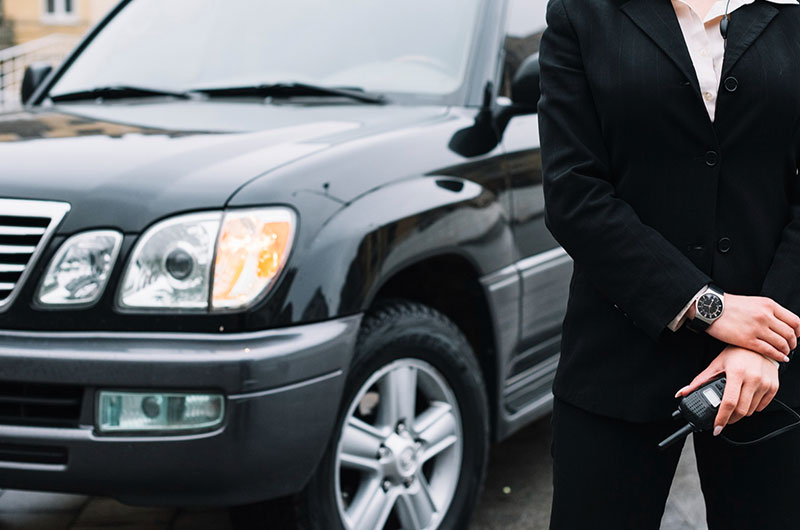
When it comes to corporate travel, safety is no longer just a box to tick. More organizations are currently asking: What are the top armored vehicles for corporate trips, and how to choose the right one for their needs?
With rising expectations around duty of care and executive protection, armored transport is becoming part of standard planning rather than a last-minute upgrade. This guide helps corporate travel planners understand when armored transport is necessary, which vehicles are actually used in real business scenarios, and how to choose the right option based on real travel needs.
In This Guide, You Will Get To Learn:
- When armored transport becomes necessary for corporate travel
- What protection levels mean in practice
- Which vehicles suit different travel scenarios
- How to arrange secure transportation across locations
How Do Businesses Decide If They Even Need an Armored Vehicle?
The Executive Protection Service Market was valued at $6.66 billion in 2024 and is expected to nearly double to $12.5 billion by 2035, driven by increasing security concerns for high-profile corporate leaders. Choosing whether to use armored transport depends on practical factors rather than preference. Companies evaluate a combination of destination risk, traveler profile, and trip structure to determine whether armored transport is necessary.
- Destination risk: Destinations that are prone to high-risk, politically sensitive, or high-traffic tend to demand armored transportation. This is especially relevant for companies operating across regions, whether arranging armored car services in Brazil or coordinating armored corporate vehicles in Mexico, where local conditions and risk levels can vary significantly.
- Passenger profile: Top executives, front-line leaders, or VIP clients need more security.
- Trip design: Multi-stop itineraries, nighttime travel, and tight schedules can increase exposure during ground transportation.
- Local conditions: Standard vehicles are not suitable for unpredictable road conditions, limited infrastructure, or security concerns. Road traffic injuries are the leading cause of death for healthy travelers worldwide, claiming 1.19 million lives annually. In hazardous settings, armored vehicles provide the structural integrity needed to survive collisions that would be fatal in standard cars.
- Duty of care: In more hazardous settings, the decision to avoid using armored transport is not only a cost decision but a responsibility decision. Under ISO 31030 standards, failing to provide adequate protection in a known high-risk environment can lead to significant legal liability and reputational damage if an employee is harmed.
A Quick Word on Protection Ratings Before We Get Into the Vehicles
Understanding protection ratings is essential before selecting any armored vehicle. These ratings indicate what type of threats the vehicle is designed to withstand.
- BR4 / B4 — protects against a handgun. Appropriate in less risky urban settings.
- BR6 / B6 – withstands high-powered rifle rounds. The most common level for corporate executive travel.
- BR7 / B7 – protects against armor-piercing bullets. Used in more dangerous situations.
The BR6 is the minimum requirement for most corporate trips. The provider must be able to verify the precise rating of all vehicles in their fleet. If they are not able to, that is one of the issues they should flag before any booking is made.
6 Leading Armored Vehicles for Corporate Trips
1. Mercedes-Benz S-Class Guard: Setting the Standard for Executive Sedans
The S-Class Guard is special in itself as it is not a modified vehicle; it is a security platform. Whereas the other sedans are taken to a workshop to be covered with steel, Mercedes constructs the protective shells first and then attaches the body panels on it. This makes it a car that drives like a normal vehicle even though it has a weight of more than four tons. It is the only option available to executives who require to hold high stakes meetings or go through sensitive documents in maximum acoustic isolation as they move through potentially hostile areas.
Best For: Executives who require refined, factory-integrated protection without drawing attention or compromising ride quality.
Key features:
- Protection Level: VPAM VR10
- Chassis-Integrated Protection: The armor is not an afterthought, but rather a part of the vehicle.
- PA and Fresh Air Emergency: Resists gas attacks, but enables communication to the outside without lowering windows.
- Hydraulic Window Actuators: Unlike electric motors that can fail under the weight of glass, these ensure windows operate even after a power loss.
2. BMW 7 Series Protection: Performance with Advanced Security
Whereas the Mercedes is geared towards being an unbreakable fort, the BMW 7 Series is made for active defense. It is built to suit urban areas where the biggest danger is not a roadside bomb but a kidnapping mission in a traffic jam. The 7 Series incorporates a Protection Core comprising of hot-formed steel armour that is much lighter than conventional plating. This would enable the driver to keep the acceleration and steering reaction to maneuver through traffic and leave a kill zone within a short period.
Best For: In dense metropolitan areas where manoeuvrability and speed are the main focus of safety needs, these are suitable for the executives.
Key features:
- Protection Level: VPAM VR9
- Core Protection: This is self-contained armor cell that maximizes the weight to protection ratio.
- All-Wheel Steering: Decreases the turning radius, which enables the vehicle to turn in sharp U-turns in narrow urban streets.
- Self-Sealing Fuel Tank: It is a special coating that closes holes caused by bullets or shrapnel automatically to eliminate leakage.
3. Toyota Land Cruiser 300: The World’s Most Trusted Armored SUV
The Land Cruiser 300 is the industry standard for “unimproved” environments. It has the advantage of mechanical simplicity and worldwide availability of parts. In case a Land Cruiser got stuck in some isolated area, the local mechanics will have a high chance of repairing it.
It is made on a strong ladder frame that survives on corrugated dirt roads and hot climates. It is the first option when visiting sites of mines, oil fields or building areas where a luxury sedan would sink. Companies managing armored vehicles in Cameroon and other complex markets consistently list the Land Cruiser 300 as their preferred platform for exactly this reason.
Best For: Regional directors and engineering teams that visit remote areas of operations or the emerging markets.
Key features:
- Protection Level: BR6 / B6 (Most Common)
- Extreme Thermal Management: Improved cooling systems will ensure that engines do not overheat when traveling in low-speed but high-load environments, such as deserts.
- 360-Degree Floor Protection: This was designed with one goal in mind, to endure DM51 hand grenades dropped directly beneath it.
- Global Serviceability: Compatible with Toyota’s worldwide parts network, ensuring minimal downtime in foreign markets.
4. Chevrolet Suburban Shield: Command Presence for Group Mobility
The Suburban is less of a car and more of a logistics solution. It also acts as central command vehicle within a convoy in corporate travel. Its enormous internal space can be used to install new satellite communication arrays, signal jammers, and medical devices without compromising the number of passengers. It is the only car in this list capable of transporting a complete five-person executive team and their luggage in one armored unit and makes the task of a security detail a little simpler.
Best For: Delegation movements or trips that involve heavy onboard technology use and need security staff.
Key features:
- Protection Level: BR6 / B6
- High-Payload Suspension: Air ride systems redone to handle the enormous weight of a full team with ballistic plating.
- Heavy-Duty Door Hinges: Large, strengthened hinges that do not allow the heavy armored doors to hang or jam as they get older.
- Dual Battery System: This prevents high-draw loads such as radio relays off of the cranking power of the engine.
5. Lexus LX 600 Armored: Refined Travel for Extended Itineraries
The LX 600 is for the traveler who desires the strength of the Toyota Land Cruiser but must get to a five-star hotel without appearing that he has just left a battlefield. It shares the same rugged 300 series chassis, but introduces some layer of refined dampening that filters out the vibration that armored SUVs normally experience. It is the reliable “daily driver’’ of the armored world, as it needs less specialized attention than its European counterparts and has a better longevity when deployed on long-term missions.
Best For: Long-term corporate residencies where the vehicle will be used daily for both site visits and city commutes.
Key features:
- Protection Level: BR6 / B6
- Active Height Control: Raise and lower the vehicle automatically due to obstacles in the off-road and due to high-speed stability respectively.
- Ballistic Overlaps: Patented door-seam protection that ensures no “weak spots” exist where the door meets the frame.
- Twin-Turbo V6 Torque: This gives the vehicle high low-end torque which enables the vehicle to push its armored weight up steep climbs without burdening the engine.
6. Range Rover P530: The High-Visibility Diplomat
The Range Rover P530 is about presence. In many international business hubs, the vehicle you arrive in is a signal of status. Its standout feature is its “All-Terrain Progress Control,” which acts like a low-speed cruise control for difficult surfaces. If an escape route involves driving over a sidewalk, through a park, or across a construction site, the Range Rover is the most capable of maintaining traction. For businesses building sustainable transportation solutions into their travel policy, it’s worth noting that hybrid armored variants of this platform are increasingly available.
Best For: High-profile VIPs who need to maintain a specific public image while traveling through areas with unpredictable infrastructure.
Key features:
- Protection Level: BR6 / B6
- Off-Road Geometry: Best-in-class approach and departure angles, essential for jumping curbs or navigating debris.
- Acoustic Laminated Glass: Beyond being bulletproof, the glass is designed to block out the noise of crowds or protests.
- Hybrid Security: Offers a silent “EV-only” mode for quiet, low-profile departures from sensitive locations.
How Corporate Teams Secure Armored Transportation?
Securing armored transportation goes beyond selecting a vehicle. It requires reliable availability, trained chauffeurs, and dependable service across locations.
Limossist has a globally networked fleet of executive and secure vehicles in various markets. For travel managers handling multi-destination itineraries, maintaining consistent service standards across locations can be challenging. Working with a provider that offers centralized coordination helps simplify planning and ensures reliability throughout the trip. You can explore the full range of transport options.
The Right Vehicle Is Out There, You Just Need to Ask the Right Questions
The best armored vehicles for corporate trips are not necessarily the most expensive, but the ones that align with the specific demands of the journey. Whether the priority is discretion, group movement, or operating in demanding environments, the decision should always reflect actual travel requirements rather than assumptions.
Working with a provider that can deliver verified vehicles and consistent service across locations ensures that corporate travel remains both efficient and secure.
Frequently Asked Questions
Are armored sedans or SUVs better for corporate travel?
The choice varies depending on trip structure and passenger requirements. Armored sedans are generally preferred for individual executives who need discreet, efficient city transfers. SUVs are more suitable for group travel, longer routes, or locations where road conditions may vary. Most companies select the vehicle based on logistics rather than comfort alone.
What should corporate travel managers confirm before booking an armored vehicle?
Travel managers should focus on operational details that directly affect the trip. This includes checking passenger capacity, luggage space, chauffeur experience, and familiarity with local routes. It is also important to confirm flexibility in case of schedule changes or multi-stop itineraries. These factors help ensure smoother coordination and fewer disruptions during travel.
Can companies request a specific protection level when booking armored transport?
Companies can request a specific protection level, but availability depends on the destination and fleet options. Providers usually recommend a suitable level based on the travel context and passenger profile. It is advisable to request proper documentation confirming the vehicle’s rating before finalizing the booking. This ensures clarity and avoids misunderstandings.
Do armored vehicles affect comfort during executive travel?
Armored vehicles are designed to maintain a comfortable experience, especially in premium models. While the added weight can slightly change how the vehicle handles, manufacturers adjust suspension and interior features to compensate. Passengers can still expect a smooth and controlled ride. The focus is on maintaining comfort without compromising safety.
Is it possible to arrange armored transport for multi-city or international business travel?
Yes, but it requires more planning compared to standard transport. Each location may have different availability and service standards, which can affect coordination. To maintain consistency across destinations, companies often engage providers with broader geographic reach and operational capabilities.
Are armored vehicles only used in high-risk destinations?
Their use is not limited to high-risk areas. Many organizations choose armored transport for executive visibility, privacy, or structured movement during important business activities. It can also support duty-of-care responsibilities in high-profile situations. The decision is often based on planning needs rather than risk alone.
Sources
Executive Protection Service Market Size, Share, Price, Trends, Growth, Analysis, Report and Forecast 2024 to 2032 https://www.wiseguyreports.com/reports/executive-protection-service-market
Road Traffic Injuries Fact Sheet https://www.who.int/news-room/fact-sheets/detail/road-traffic-injuries
ISO 16750-3:2012 Road Vehicles — Environmental conditions and testing for electrical and electronic equipment — Part 3: Mechanical loads https://www.iso.org/standard/54204.html