
How Companies Can Reduce Executive Transportation Costs While Improving Quality
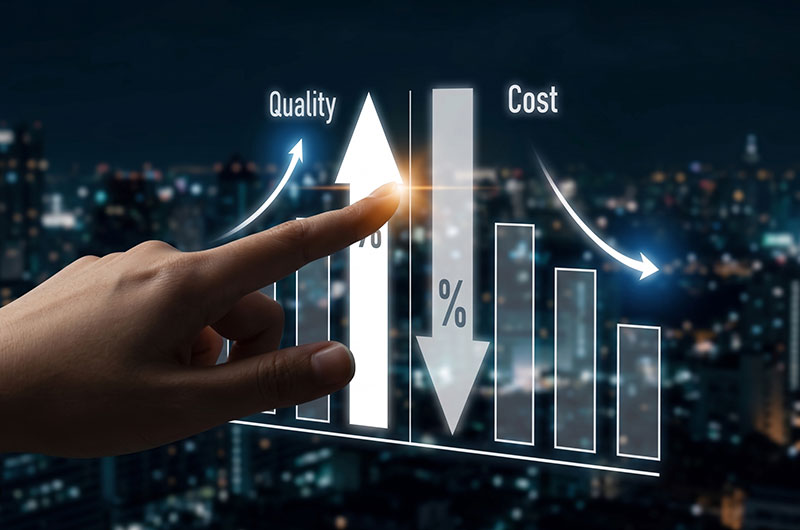
The executive suite and the finance department are in an ongoing tug-of-war in the high-stakes corporate travel world. On the one hand, travel costs appear to be increasing each quarter. On the other hand, top-level managers need hassle-free, quality, and smooth transportation to deliver their best.
The myth that cutting budgets equates to exchanging a smooth executive sedan for a cramped rideshare or a low-quality car service is widespread.
But what if the opposite were true?
Companies are seeing a major shift from manual booking to more structured, system-driven approaches to reduce executive transportation costs. Numerous organizations are saving 10-30% on executive transportation costs while enhancing their teams’ experience. It is not about spending less on the person; it is about spending more intelligently on the process. Are you ready to stop overpaying for inefficiency?
What This Guide Breaks Down for You
- Why reactive planning is costing you more than you think
- 5 smart strategies to reduce executive transportation costs
- How optimization makes the experience even better
- How everything comes together in a real-world scenario
- Why smarter transportation beats cheaper transportation
Why Reactive Planning Is Costing You More Than You Think?
Some companies still manage executive travel reactively. An executive requires a ride to the airport? A local car service is booked at the last moment. Is the guest a VIP? Someone on the team spends valuable time calling around to find a suitable option.
This approach creates inefficiencies that are easy to overlook but expensive over time. Companies often end up paying higher last-minute rates, dealing with inconsistent vehicle quality, and covering costs for vehicles that sit idle while waiting. The lack of planning also leads to unnecessary stress and coordination challenges for internal teams.
Research by Deloitte showed that companies focusing on optimizing their travel spend reported an average shift of 28% toward more cost-efficient strategies in 2025. This highlights a broader trend: businesses are recognizing the hidden cost of reactive planning and the need for a more structured approach.
What Are the Smart Strategies to Reduce Executive Transportation Costs?
Strategy 1: Let the Specialists Take Care of It Instead
Why own a fleet when you only need the service? Maintaining company-owned vehicles comes with heavy capital expenditure and ongoing operational responsibilities. From purchasing luxury cars to handling maintenance, insurance, and staffing, the burden quickly adds up.
By outsourcing, companies remove the responsibility of owning and managing vehicles altogether. Instead of dealing with internal logistics, they gain access to a ready, professional setup.
- Eliminate vehicle depreciation and resale losses
- Remove the complexity of chauffeur payroll, training, and benefits
- Ensure consistent access to a standardized, high-end fleet across cities
This ensures consistent service quality across locations, which is difficult to maintain with in-house fleets.
Strategy 2: Scaling Your Ride Like You Scale Your Software
Fixed costs can quietly drain a transportation budget. Owning vehicles means ongoing expenses, even when they are not in use.
A more efficient approach is to adjust transportation based on actual demand. This ensures the right vehicle is always available, improving both comfort and reliability. During busy periods like conferences or major events, companies can increase the number of vehicles, including larger options such as the GMC Yukon or Chevrolet Suburban. When demand slows down, fewer vehicles are needed, and costs naturally decrease.
Strategy 3: Buying in Bulk Works for Luxury Travel Too
When bookings are consolidated under one provider, companies benefit from volume-based pricing advantages. Instead of arranging trips individually, grouping demand allows access to better negotiated rates.
This allows businesses to access high-quality vehicles and white-glove service at more optimized prices than booking trips individually. It maintains premium service standards while reducing costs.
More details on how these rates are structured can be found by looking into the cost of limo hire and how it fits into a corporate budget.
Strategy 4: Adopt Modern Systems to Improve Efficiency
Technology is no longer a nice-to-have but a necessity in the financial sense. Data is used on modern platforms to cut fat from travel spend and optimize business travel logistics. This leads to smoother, more reliable journeys for executives.
- Smart Route Optimization: A smart route can save up to 15% of fuel. Geotab research has shown that optimized routing greatly reduces travel time and idling, which directly translates to reduced invoices.
- Predictive Maintenance: Predictive maintenance is an AI approach that can reduce maintenance costs by 20-30 percent by detecting mechanical problems before they cause failures. It implies increased dependability among the executives and reduced service breakdowns in VIP Premium SUV vehicles such as the Range Rover Vogue.
- Fleet Telematics: Monitoring driver behavior helps companies ensure their drivers drive efficiently. Verizon Connect reports that the average fuel costs at the companies where telematics were applied fell by 11%.
Strategy 5: Optimize Travel with Group Transportation
The most effective method of saving is sometimes to unite people. When five executives are going to the same place, why send five different sedans? Executive vans such as the Mercedes-Benz Sprinter or luxury MPVs such as the Lexus LM would significantly lower the cost per head. Executives still travel comfortably without compromising on space or experience.
Industry data from the Global Business Travel Association (GBTA) suggests that ground transportation rates are stabilizing, but remaining higher than pre-pandemic norms. This makes group coordination more than just a convenience; it is a vital strategy to maintain a sustainable transportation solution while managing rising per-attendee costs.
Proof That Optimization Makes the Experience Even Better
It sounds like a paradox, doesn’t it? What is the way through which one can spend less and have a better experience? The answer lies in the “hidden” value of time. Optimized travel results in a skyrocketing increase in executive productivity. A cool and secretive ambiance within a Rolls-Royce Ghost or Bentley Mulsanne enables a leader to accept a private phone call or complete a presentation without the intrusion of a shuttle.
The worry about where your driver disappears is gone with real-time tracking. In addition, brand perception remains high. Coming in a fine-furnished, high-end car, such as a Jaguar XJL or Mercedes-Maybach S-Class, conveys an air of prosperity to customers.
By choosing to reduce executive transportation costs through efficiency rather than cutting corners, the comfort and well-being of the team are actually enhanced.
Who wouldn’t perform better after a stress-free, smooth ride?
How Limossist Fits Into This Modern Framework?
A mid-sized tech firm coordinating a three-day board member roadshow across four cities was initially planning to book individual rides for each executive. This approach would have meant managing dozens of bookings, inconsistent vehicle quality, and a heavy coordination burden on the internal team.
With support from Limossist, the plan was restructured into a more streamlined setup. Group transfers were arranged using two Mercedes-Benz Sprinters, while a dedicated Cadillac Escalade was assigned for the CEO’s individual meetings. All movements were coordinated through a single point of contact, ensuring the entire group arrived on time at each location without delays.
By shifting to this more organized approach, the company reduced its projected transportation spend by around 20% while significantly simplifying logistics. Rather than handling multiple receipts and last-minute coordination, the team was able to focus fully on their meetings and investor interactions.
Smarter Transportation Beats Cheaper Transportation Every Time
The reduction of costs should not be a punishment at the end of the day. It must seem a step up in strategy.
Savings in the long run = Strategy + Technology.
When transportation is regarded as an investment and not a line-item expense, the outcome speaks volumes.
To understand how such a streamlined system can be implemented, one can think of the convenience of making a reservation for airport limo service as the first step to a more optimized future in corporate travel, and to reduce executive transportation costs effectively.
Frequently Asked Questions
How can companies measure the success of their executive transportation strategy?
Success can be measured through clear metrics such as on-time performance, cost per trip, and executive satisfaction. Tracking these indicators over time helps identify inefficiencies and areas for improvement. A well-managed strategy should show consistent service quality while keeping spending predictable and controlled.
What role does data reporting play in managing transportation budgets?
Detailed reporting provides visibility into where money is being spent and where adjustments can be made. It helps companies identify patterns such as peak usage times or unnecessary expenses. With better insights, decision-makers can plan more effectively and avoid budget surprises.
How can executive transportation support corporate branding?
Transportation is often the first and last impression during business interactions. A well-organized, premium travel experience reflects professionalism and attention to detail. This can strengthen client trust and reinforce the company’s image as reliable and high-quality.
What are the risks of inconsistent transportation services for businesses?
Inconsistent service can lead to delays, missed meetings, and frustration for executives. It also creates uncertainty, making it harder to plan schedules effectively. Over time, this can impact both internal efficiency and external business relationships.
How can companies handle last-minute transportation changes without disruption?
Handling last-minute changes requires a flexible system with real-time coordination and quick response capabilities. Having access to a wide network of vehicles and support teams ensures that adjustments can be made without affecting schedules. This flexibility is key to maintaining smooth operations.
Why is transparency in pricing important for executive transportation?
Transparent pricing helps companies understand exactly what they are paying for and avoid hidden costs. It also builds trust with service providers and makes budgeting more accurate. Clear cost structures allow businesses to make informed decisions without unexpected expenses.
Sources
Deloitte Report: Mixed Outlook for Business Travel
http://businesstravelnews.com/Intelligence/Deloitte-Report-Mixed-Outlook-for-Business-Travel
How Route Optimization Helps Cut Costs, Boost Efficiency and Deliver Better
Fleet Management Trends: Innovation in the Public Sector
https://www.verizonconnect.com/resources/article/government-fleet-management-trends/
Global Business Travel and Events Prices Set to Stabilize Through 2025 and 2026